

Weathering in Black Women: When Chronic Stress Lives in Your Body
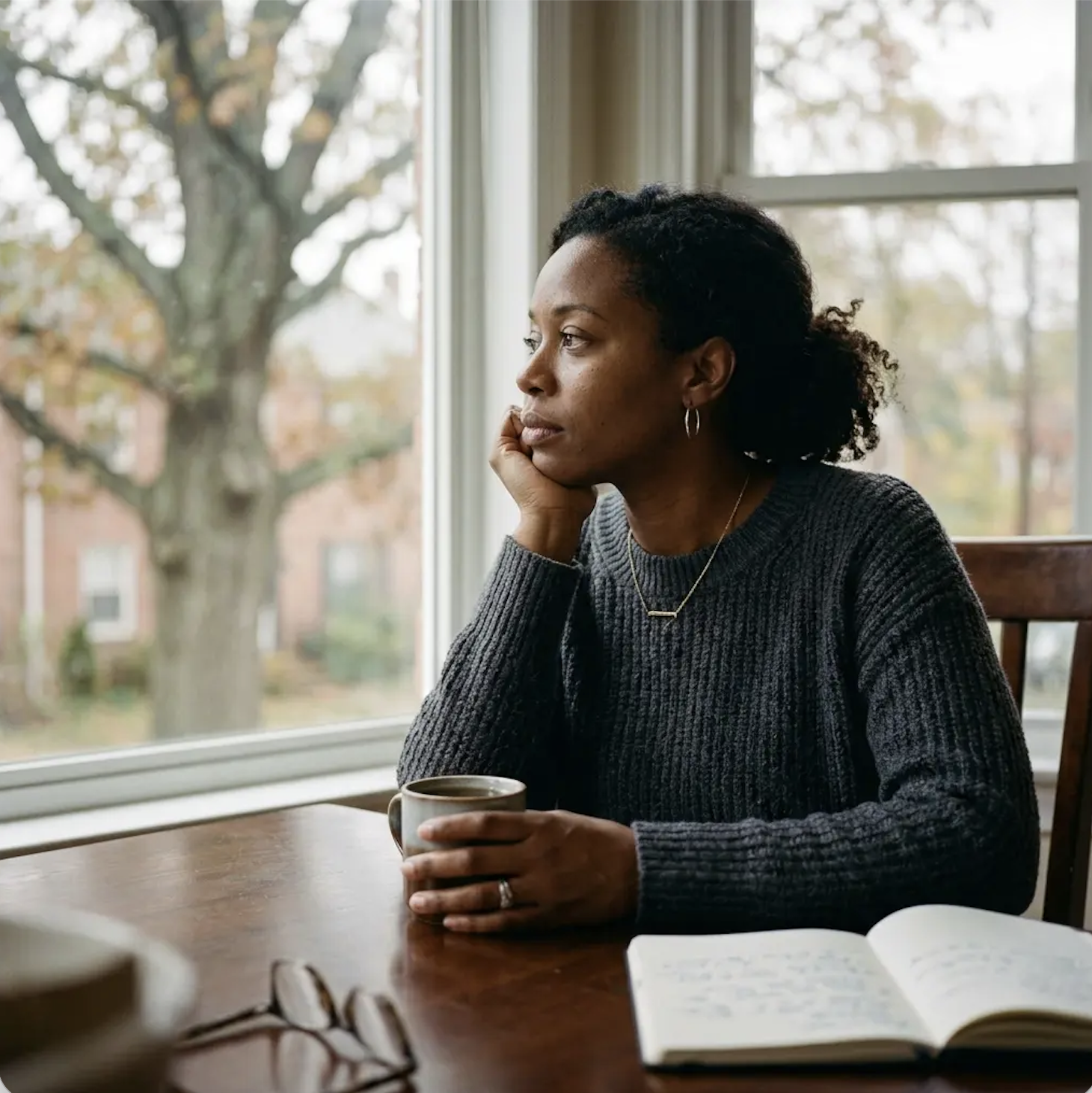
Somewhere along the way, many Black women learned that being strong wasn't optional.
You handled it.
You figured it out.
You kept going.
Even when nobody asked how much it was costing you.
Maybe you became the dependable one. The responsible one. The one everyone could count on.
You learned how to show up, push through, and carry more than your share. And from the outside, it probably looked like you were doing just fine.
But eventually, the constant pressure catches up.
The exhaustion gets harder to ignore. Rest doesn't feel restorative. Your body feels tense even when there's nothing immediately wrong. You find yourself wondering why you're so tired when you've done everything you were supposed to do.
This isn't just burnout. This is weathering.
Many of the women I work with don't come to therapy saying, "I think I'm experiencing weathering." They come in saying they're exhausted. They tell me they're tired of being the responsible one. Tired of carrying everyone else's needs. Tired of feeling like they can never fully relax, even when nothing is technically wrong.
What Weathering Actually Means
In 1992, public health researcher Dr. Arline Geronimus discovered something that changed how we understand chronic stress in Black women's bodies.
She found that young Black women had better pregnancy outcomes in their late teens than in their mid-twenties. The exact opposite of white women. By their twenties, Black women had already endured years of chronic stress. Their bodies were aging faster. Not because of genetics. Because of the constant, unrelenting pressure of navigating a world that demands more while offering less protection.
Weathering is what happens when chronic stress doesn't just live in your mind. It lives in your cells. Your nervous system. Your body.
It's the biological wear and tear that accumulates from years of holding it together while carrying invisible weight. And for Black women, that weight is heavy, layered, and rarely acknowledged by the people around you.
Why Black Women Are Particularly Affected by Chronic Stress

The stress Black women carry isn't abstract. It's layered, constant, and often invisible to people who aren't living it.
You're navigating workplace dynamics while trying to prove you belong. You're managing the mental load of your household while also supporting extended family. You're code-switching to make others comfortable. You're absorbing microaggressions that you can't always name but definitely feel in your body.
You're dealing with the combined weight of racial and gender discrimination, often at the same time, often without anyone acknowledging how much that costs you.
And here's what makes weathering so insidious: even when you reach a higher level of success, the stress doesn't stop. The daily weight of racism applies whether you're low, middle, or high income. Success doesn't protect you from weathering. In many ways, it just adds new layers of pressure.
What does that look like in real life? It looks like being the only one in the room and feeling like you have to represent everyone who looks like you. It looks like being passed over and wondering if it's your work or your skin. It looks like going home and still not being able to exhale, because the weight followed you there too.
Why High-Achieving Black Women Are Especially Vulnerable
Here's something I see often in my work with high-achieving women: excellence can become a survival strategy.
For many Black women, achievement wasn't just about personal ambition. It was about protection. If you were exceptional, maybe you'd be overlooked less. Maybe you'd be treated with more respect. Maybe you'd finally feel safe enough to relax.
So you worked harder. You stayed later. You volunteered for the extra project. You made yourself indispensable.
And it worked, in some ways. You built a career. You earned respect. You created a life that looks impressive from the outside.
But achievement rarely delivers the relief it promised. Instead, success often creates new pressure. Now there's more to maintain. More to prove. A higher standard to uphold. More people depending on you. And still that underlying fear that if you slow down, it could all fall apart.
So you keep going. You keep pushing. You keep performing strength even when you're running on empty.
This is what I mean when I say that high-achieving Black women are especially vulnerable to weathering. The very strategies that helped you survive and succeed can also be the ones quietly wearing you down.
Ask yourself: when was the last time you felt genuinely at ease? Not just a brief break between responsibilities, but actually, deeply at rest?
The Strong Black Woman Myth That's Hurting You
You've probably heard it your whole life. Be strong. Don't complain. Keep it together. Handle it.
The Strong Black Woman archetype sounds like a compliment. It is, in many ways, a testament to the resilience of Black women across generations. But it's also a trap.
It tells you that your worth is tied to how much you can endure without breaking. That asking for help is weakness. That showing vulnerability means you're failing.
When you've internalized that message long enough, you stop asking for support even when you desperately need it. You start to believe that needing rest or help somehow makes you less than.
This isn't strength. This is survival mode dressed up as resilience. And your body is keeping score.
Signs You May Be Experiencing Weathering
Weathering doesn't announce itself with a clear diagnosis. It shows up in ways that are easy to dismiss or normalize, especially if you've been living with chronic stress for a long time.
You might notice:
Constant fatigue that rest doesn't touch
Headaches or migraines that seem to come out of nowhere
Digestive issues that flare when stress peaks
Difficulty sleeping even when you're exhausted
Irritability that feels out of proportion to the situation
Emotional eating or a complete loss of appetite
Frequent illness because your immune system is worn down
Brain fog that makes it hard to focus or remember things
Loss of interest in things that used to bring you joy
These aren't character flaws. They're not signs that you're weak or falling apart. They're your nervous system trying to tell you something important.
Emotions live in our bodies. Chronic stress has a way of settling into your jaw, your shoulders, your stomach, your chest. It shows up physically long before it ever gets named or addressed. And for many Black women, the physical symptoms appear years before anyone connects them to stress.
How Weathering Shows Up as Anxiety, Burnout, and People-Pleasing

Weathering doesn't just affect your physical health. It shapes how you move through the world emotionally, and over time, it starts to look like anxiety, burnout, and people-pleasing.
You might find yourself saying yes when you want to say no. Overextending to prove your value. Feeling guilty when you rest. Believing that your worth is tied directly to your productivity.
This is what chronic stress does over time. It convinces you that taking care of yourself is selfish. That boundaries are rude. That your needs matter less than everyone else's.
You end up anxious because you're constantly anticipating the next demand. Burned out because you never stop giving. People-pleasing because somewhere along the way, you learned that keeping others comfortable felt safer than advocating for yourself.
And then you wonder why you feel so disconnected from your own life. Why you're going through the motions but not actually present. Why you can't remember the last time you felt genuinely okay.
That disconnection makes sense. It's what happens when you've been running on overdrive for too long.
You Don't Have to Be Strong All the Time
Here's something I want you to hear: you are allowed to be tired.
You are allowed to struggle. You are allowed to need support. You are allowed to set boundaries without guilt.
Strength isn't about how much you can endure in silence. Real strength includes knowing when to ask for help, when to rest, and when to say, "I can't carry this alone anymore."
You deserve the same compassion you extend to everyone else in your life. Not a watered-down version of it. The real thing.
Practical Ways to Begin Healing from Weathering
Healing from weathering doesn't mean adding more to your already full plate. It means making small, intentional shifts that remind your nervous system it's safe to slow down. And it starts with paying attention.
Start noticing where stress lives in your body. Does your jaw clench? Do your shoulders tighten? Does your stomach hurt when you're anxious? Emotions live in our bodies. Noticing where you hold tension is the first step toward releasing it. You can't address what you haven't acknowledged.
Notice when you're operating from obligation instead of choice. If nobody was disappointed, what would I choose right now? There's a difference between doing something because you genuinely want to and doing it because you're afraid of what happens if you don't. Start paying attention to that distinction. When you say yes to something, ask yourself: “Am I choosing this, or am I just avoiding guilt?” That awareness alone can shift something.
Create small moments of rest throughout the day. You don't have to carve out a full hour of quiet to experience relief. Three minutes of intentional breathing between meetings counts. Sitting in your car for a few minutes before walking into the house counts. Rest doesn't have to be a grand gesture. It just has to be real.
Pay attention to what triggers guilt when you try to set a boundary. Guilt isn't always a sign that you've done something wrong. Sometimes it's just a sign that you're doing something new. When guilt shows up after you say no or take time for yourself, get curious about it instead of immediately backing down. Where did that belief come from? Is it actually true?
Practice self-compassion when you can't do everything. You are going to have days when you fall short of your own expectations. Days when you don't have enough energy to be everything to everyone. Those days don't define your worth. They're just days. Talk to yourself the way you'd talk to someone you care about. You wouldn't tell a friend she's a failure because she needed a break. Don't say it to yourself either.

Examine the beliefs you hold about worth, productivity, and responsibility. Many high-achieving women carry deep, unexamined beliefs that tie their value to what they produce. That rest is laziness. That needing help is a burden. That they're responsible for everyone else's comfort. These beliefs didn't come out of nowhere, and they're worth looking at honestly. Just because you've always believed something doesn't mean it's serving you.
Give yourself permission to receive support instead of always providing it. You are someone who gives. You show up, you help, you hold space for others. But you are also allowed to be on the receiving end of that. Letting someone support you isn't weakness. It's actually a form of trust, and it's something that can change the quality of your relationships and your life.
Challenge the belief that your worth is tied to what you produce. You matter because you exist. Not because of what you accomplish or who you take care of. That's not something you earn. It's something you already have.
These aren't quick fixes. Healing from weathering takes time, and it's not a straight line. There will be steps forward and steps back. But small, consistent choices add up. And you don't have to get it perfect to make progress. You just have to keep going.
How Therapy Can Help You Heal from Weathering
Therapy isn't about fixing you. You're not broken.
It's about creating space to look honestly at the patterns you've been living by and deciding whether they still serve you. And for many high-achieving women, that's the work that changes everything.
In therapy, we explore why you keep saying yes when you mean no. Why rest feels impossible. Why you feel guilty for having needs. Why the thought of slowing down makes you more anxious instead of relieved.
A big part of that work involves learning to recognize when your fears and assumptions are being treated as facts. Your nervous system has been in survival mode for a long time. It's learned to read ordinary situations as threats. Therapy helps you slow that process down, examine what's actually happening, and respond from a more grounded place rather than reacting from fear.
We also work on nervous system regulation, because healing from chronic stress isn't just about changing your thoughts. It's about helping your body feel safe again. You learn to recognize when you've been activated and build tools to come back to yourself.
Boundaries are a big part of the work too. Not just saying no, but understanding why boundaries have felt so difficult in the first place. For many women, the resistance to boundaries is less about skill and more about fear. Fear of rejection, of conflict, of being seen as difficult. We work through that together.
We look at the connection between your thoughts, your emotions, and your behaviors. At how the story you've been telling yourself about who you have to be is shaping how you feel and what you do. And we work toward something different: moving from survival mode into intentional living. From reacting to choosing. From carrying everything alone to building a life where you actually have room to breathe.
Most importantly, you get to be seen. Not as the strong one. Not as the one who has it all together. But as a whole person who deserves care, rest, and genuine support.
You Deserve More Than Survival Mode

Weathering in Black women is real. The chronic stress you carry is real. The exhaustion underneath the accomplishments is real.
And you don't have to keep living this way.
You deserve to rest without guilt. To set boundaries without fear. To care for yourself with the same compassion you give everyone else.
Change is possible. Healing is possible. Not because you finally push hard enough, but because you finally give yourself permission to stop white-knuckling through everything and start building something sustainable.
If you're a woman in Texas who is tired of carrying everything alone, you don't have to keep pushing through on your own. At Growing in Grace Counseling, I help women move from chronic stress, anxiety, and burnout toward a life that feels more balanced, intentional, and sustainable.
I offer virtual therapy throughout Texas and in-person counseling in Cedar Hill. If you're ready to explore what healing could look like for you, schedule a free 15-minute consultation to see if we're a good fit.
You deserve support, too.